Ocean
Higher sea levels increase the risk of flooding
What Is El Niño and Why Does It Matter?
NOAA’s National Weather Service predicts that El Niño conditions are likely to develop by July 2026 and continue throughout the winter season. This climate phenomenon could increase the risk of high tide flooding in many coastal regions across the United States.
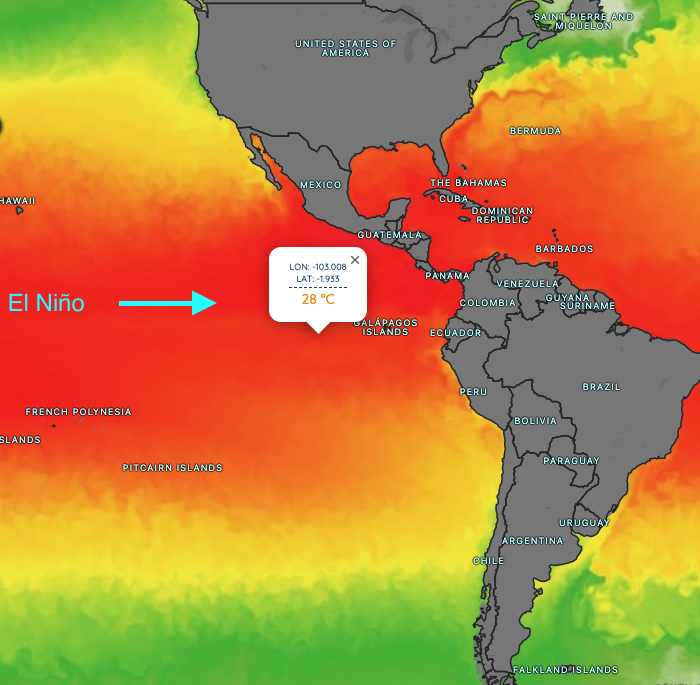
El Niño is part of a natural climate cycle called the El Niño-Southern Oscillation (ENSO), which alternates between warmer (El Niño) and cooler (La Niña) phases every two to seven years. During El Niño events, trade winds across the tropical Pacific weaken, allowing warm ocean water to move eastward toward the Americas. This process raises sea surface temperatures and sea levels, especially along the western coast of North America.
Scientists explain that these warmer ocean conditions can last for several months and significantly influence weather patterns worldwide.
Higher Sea Levels Could Lead to More Flooding
One of the main concerns during an El Niño event is the increased risk of coastal flooding. Warmer ocean waters can shift the Pacific jet stream southward, changing storm tracks and weather systems across the United States.
Along the U.S. West Coast, elevated sea levels combined with strong surf can push tides farther inland than normal, increasing the likelihood of flooding during high tides. On the East Coast, especially in the mid-Atlantic region, El Niño often brings stronger storms and more storm surge events. Meanwhile, the Gulf Coast and Southeast may experience above-average rainfall.
NOAA scientists have observed that high tide flooding has become more common over recent decades, even compared to major El Niño events in 1982-1983 and 1997-1998. Rising sea levels caused by climate change are making coastal communities more vulnerable than ever before.
NOAA Warns of a “Double Whammy” for Coastal Communities
According to NOAA oceanographer William Sweet, Ph.D., the combination of long-term sea level rise and a strong El Niño creates a dangerous situation for coastal regions.
“It usually ends up being a double whammy,” Sweet explained, referring to the especially powerful El Niño events of 2015-2016 and 2023-2024, which caused much more frequent flooding.
The first factor is decades of rising sea levels, leaving many coastal communities already close to critical flood thresholds. The second factor is the potential arrival of a strong El Niño, which can intensify tides, storms, and flooding events on both the West and East Coasts.
If El Niño conditions continue to strengthen through late 2026, experts warn that many U.S. coastal communities could face deeper, more frequent, and more widespread flooding during the coming winter months.
NOAA’s National Weather Service predicts that El Niño conditions are likely to develop by July 2026 and continue throughout the winter season. This climate phenomenon could increase the risk of high tide flooding in many coastal regions across the United States.
El Niño is part of a natural climate cycle called the El Niño-Southern Oscillation (ENSO), which alternates between warmer (El Niño) and cooler (La Niña) phases every two to seven years. During El Niño events, trade winds across the tropical Pacific weaken, allowing warm ocean water to move eastward toward the Americas. This process raises sea surface temperatures and sea levels, especially along the western coast of North America.
Scientists explain that these warmer ocean conditions can last for several months and significantly influence weather patterns worldwide.
Higher Sea Levels Could Lead to More Flooding
One of the main concerns during an El Niño event is the increased risk of coastal flooding. Warmer ocean waters can shift the Pacific jet stream southward, changing storm tracks and weather systems across the United States.
Along the U.S. West Coast, elevated sea levels combined with strong surf can push tides farther inland than normal, increasing the likelihood of flooding during high tides. On the East Coast, especially in the mid-Atlantic region, El Niño often brings stronger storms and more storm surge events. Meanwhile, the Gulf Coast and Southeast may experience above-average rainfall.
NOAA scientists have observed that high tide flooding has become more common over recent decades, even compared to major El Niño events in 1982-1983 and 1997-1998. Rising sea levels caused by climate change are making coastal communities more vulnerable than ever before.
NOAA Warns of a “Double Whammy” for Coastal Communities
According to NOAA oceanographer William Sweet, Ph.D., the combination of long-term sea level rise and a strong El Niño creates a dangerous situation for coastal regions.
“It usually ends up being a double whammy,” Sweet explained, referring to the especially powerful El Niño events of 2015-2016 and 2023-2024, which caused much more frequent flooding.
The first factor is decades of rising sea levels, leaving many coastal communities already close to critical flood thresholds. The second factor is the potential arrival of a strong El Niño, which can intensify tides, storms, and flooding events on both the West and East Coasts.
If El Niño conditions continue to strengthen through late 2026, experts warn that many U.S. coastal communities could face deeper, more frequent, and more widespread flooding during the coming winter months.